Hey there! In today’s fast-paced world of agriculture, being efficient and productive is super important. That’s where the Rice Transplanter really shines as a transformative tool for modern farmers. Here at SINOMACH-Hi International Equipment Co., Ltd., we’ve seen up close how innovative machinery can totally change the game in farming. Since we started back in 1986, we’ve been at the forefront of engineering and manufacturing. We’ve teamed up with big names like Komatsu, which has allowed us to bring some really cutting-edge technology to the Chinese market. In this blog, we’re going to dive into five great reasons why investing in a top-notch Rice Transplanter can really boost your farming experience. From saving time and labor to upping your crop yields and promoting sustainability, there’s plenty to gain! So, let’s jump in and explore the amazing benefits of this essential piece of agricultural equipment.
Hey there! You know, modern rice transplanters are really changing the game for rice farming. They come with some serious perks that can seriously bump up efficiency and yields. I read this report from the Food and Agriculture Organization (FAO), and it mentioned that these fancy mechanized transplanters can boost planting efficiency by as much as 30%. I mean, think about it: that means farmers can get their fields planted quicker, covering more ground in less time. This way, they can sow on time and, in the end, enjoy better crop yields!
And there’s more! Using a rice transplanter can actually help with things like plant spacing and making sure seeds are planted at the right depth. Research in the Journal of Agronomy showed that having consistent spacing can ramp up yields by as much as 20%. When each plant gets the right amount of nutrients and light, it really makes a difference—resulting in healthier crops and boosting productivity.
Oh, and here’s a tip: when you’re on the hunt for a modern rice transplanter, don’t forget to think about how it handles different soil types and planting conditions. That way, you can really maximize its efficiency. Plus, it’s super important to make sure the people operating these machines know what they’re doing—proper training is key! And hey, keeping up with maintenance schedules can make your equipment last longer and work even better. Why not give it the best care possible?
You know, the world of agriculture is really changing, and it’s wild to see how tech is shaking things up, especially in rice planting. By 2025, we’re gonna witness some serious advancements in transplanter technology that could totally boost both efficiency and sustainability. Think about it: automated seed placement, GPS-guided navigation, and smart sensors are becoming the norm, letting farmers really nail down their planting schedules and waste way less. Plus, with drones zipping around for field monitoring and data analytics to check soil health, it’s like we have a whole new playbook for rocking those crop yields.
And here's the cool part: with precision agriculture becoming a big deal, farmers will get to fine-tune their planting techniques based on what’s actually happening in each field. By tapping into real-time data and some nifty machine learning tools, those rice transplanters aren't just gonna plant more accurately; they’ll also help cut down on labor costs. As everyone in the industry shifts towards eco-friendly methods, these tech trends are right on point with the rising demand for greener farming. So, yeah, all these advancements are setting the stage for a major transformation in rice farming—one that’s all about being efficient but also caring for the planet.
You know, investing in a really good rice transplanter can totally boost how efficiently you farm rice. I get that the initial cost might look a bit scary at first, but if you really break it down, the long-term savings and benefits make it worth every penny. Automating the transplanting process means you can cut down labor costs, which, let’s be real, usually end up being one of the biggest expenses in traditional farming. Plus, with a transplanter, you can get all that planting done way faster, giving you more time to tackle other essential tasks on the farm.
On top of that, using a rice transplanter really helps with how precisely you plant, which leads to better yields. When you transplant rice more evenly, each plant gets the right amount of space and nutrients, and that directly means healthier growth and more productivity. And let’s not forget about the seed wastage—using a transplanter helps keep that to a minimum, adding to your cost savings over time. When you consider the boost in efficiency, less labor, and overall better yields, it’s pretty clear that getting a rice transplanter isn’t just about upgrading your tech; it’s a smart financial move that can really change the game for your farming experience.
You know, precision agriculture is really shaking things up in the farming world. It’s all about merging technology with data to boost efficiency and productivity. Farmers are using some pretty cool tools—like GPS, smart sensors, and real-time data analytics—to make smarter decisions that can lead to better yields and sustainable growth. Take auto-steering technology, for example. It helps farmers plant with pinpoint accuracy while keeping soil disturbance to a minimum, which is key for healthy crops.
Plus, with the latest innovations in data visualization and deep learning, farmers can now handle complex data like a pro. This means they can get actionable insights that really make a difference in how they manage their crops. And let’s not forget about AI—implementing it in agriculture helps farmers stay on their toes when conditions change, make the most of their resources, and ultimately, increase their earnings. As these technologies keep evolving, they’re not just enhancing productivity; they’re transforming the way we farm and paving the way for a more sustainable future in agriculture.
| Feature | Benefit | Impact on Yield (%) | Cost Efficiency ($/acre) |
|---|---|---|---|
| Precision Planting | Ensures optimal spacing between plants | 15% | $30 |
| Reduced Labor Costs | Less manual labor required during planting | 20% | $25 |
| Improved Soil Integrity | Minimizes soil compaction | 10% | $20 |
| GPS Navigation | Increases planting accuracy | 18% | $35 |
| Real-Time Monitoring | Allows instant adjustments during planting | 12% | $28 |
When it comes to growing rice, sustainability isn't just some trendy term—it's actually key to making sure agriculture has a future. Advanced rice transplanters are a big part of this shift towards more sustainable farming methods. These cool machines are designed to plant rice seedlings really precisely, which helps cut down on waste and makes sure everything's spaced just right. So not only do they help boost crop yields, but they also reduce the need for a ton of chemical inputs, which is great for keeping our ecosystems healthier.
And get this—many of these modern transplanters come packed with tech that helps farmers keep an eye on how they're using resources like water and fertilizers. By fine-tuning these inputs, farmers can really cut down on their environmental impact. Switching from traditional planting methods to these high-tech transplanters not only makes farming easier and more efficient, but it also fits right in with the global push for sustainable agriculture. This way, we can ensure we're feeding future generations while also taking care of our planet.
Alright, so when you're on the hunt for the perfect rice transplanter for your farm, there are a few things you really want to think about. First off, take a good look at how big your fields are and how much rice you're planning to grow. If you've got a sprawling farm, a larger transplanter might just be your best bet, while smaller ones can really shine in tighter spaces. Just make sure whatever you choose can keep up with your planting schedule so you're not left in the dust when it comes to productivity.
Next up, think about the kind of rice you're aiming to cultivate. Different varieties can be a bit picky and may need specific transplanting methods, so it's super important to find a transplanter that can handle various soil types and conditions. Keep an eye out for machines that have adjustable settings; they can really boost your efficiency, no doubt about it.
Last but definitely not least, don’t overlook how easy it is to use and maintain the transplanter. Opt for models that have user-friendly controls and features that help reduce operator fatigue – trust me, you’ll thank yourself later. And do yourself a favor by going for one that comes with solid customer support and easily available spare parts. This way, you can keep things running smoothly and ensure your investment pays off for years to come. Happy farming!
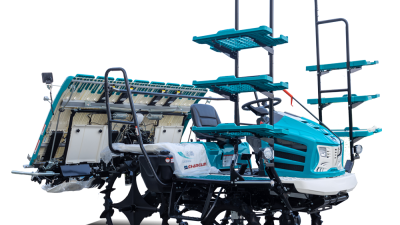
In the pursuit of enhanced efficiency in rice farming, the adoption of high-quality rotary transplanters has emerged as a game-changer. Specifically designed to manage eight rows simultaneously, these machines not only streamline the planting process but also allow for greater productivity and precision in rice cultivation. Farmers can now cover more ground in less time, significantly reducing the labor and effort traditionally required for manual transplanting.
Equipped with a robust 17.8KW Yanmar Engine, these ride-type rotary transplanters deliver impressive power, enabling them to operate effectively across varying field conditions. The adjustable planting depth between 10-55mm ensures optimal seed placement, fostering better growth and higher yields. As rice farming becomes increasingly competitive, investing in such advanced machinery positions farmers to maximize their efficiency, boost harvests, and ultimately improve profitability. Embracing technology in the fields is no longer just an option; it is a necessity for those looking to thrive in modern agriculture.
: Modern rice transplanters significantly enhance efficiency, allowing for up to 30% faster planting times, improved plant spacing and depth accuracy, and can result in crop yields that increase by up to 20%.
By automating the transplanting process, rice transplanters can drastically reduce labor costs, which are one of the highest expenses in traditional farming techniques.
Innovations such as automated seed placement, GPS-guided navigation, sensor integration, and the use of drones for field monitoring are expected to lead to increased efficiency and sustainability in rice planting.
Uniform plant spacing improves nutrient and light distribution for each plant, which contributes to healthier crops and can increase yields by up to 20%.
Farmers should consider the transplanter's adaptability to different soil types and planting conditions, as well as ensuring operators are adequately trained and that proper maintenance schedules are followed.
Although the upfront cost may be high, the long-term savings from reduced labor costs, improved planting precision, and increased yields make investing in a rice transplanter financially beneficial.
By optimizing planting techniques using real-time data and precision agriculture, rice transplanters can help minimize resource waste and support environmentally friendly farming solutions.
Technological advancements are expected to redefine rice farming by improving efficiency, sustainability, and crop yield through innovations in automation and data analysis.
Implementing proper maintenance schedules and ensuring that operators are well-trained can significantly extend the lifespan and performance of rice transplanters.
Higher planting accuracy ensures that plants grow optimally, benefiting from better spacing and nutrient distribution, which directly correlates to increased productivity and healthier crops.